
Your Best Non-Stick Healthy Cookware
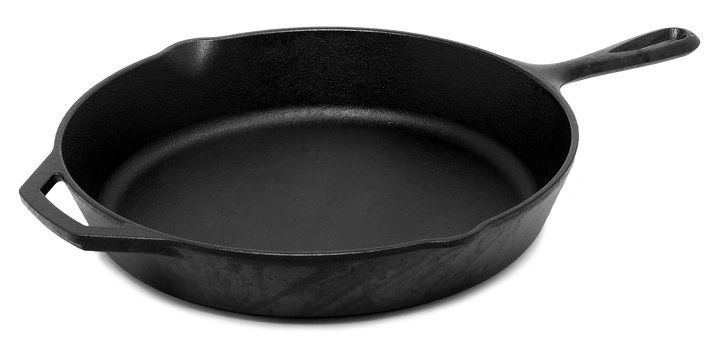
Do you use non-stick cookware? Do you find flecks of the coating falling into your food? Does the coating burn? Non-stick cookware isn’t the panacea that people thought it would be. There are more safe non stick pans choices now.
I used to use non-stick cookware – seems everyone did – from electric skillets to pressure cookers to waffle irons to skillets and pans. It seemed everything was non-stick coated, even storage containers. Teflon used to be the standard and has proven to be a terrible invention for food – it would break apart and get eaten with your food. Teflon and some other non-stick types are toxic – try to find non toxic cookware to cook with. PFAS & PFTE (Teflon) are in many non-stick coatings, even in small amounts.
Non-stick healthy cookware is available and better for you to use without toxins. The trick is how you use it for best results.
Remember how you were warned to not keep birds in the kitchen? That’s because non-stick fumes would kill them. Remember the canary going in from of the miners to make sure air was ok to breathe? If canary died the miners went no further. Why should we breathe the non-stick fumes? Now there are other non-stick healthy cookware options, but I still don’t trust them – I’ve had other types of non-stick cookware, but they all break down and get into the food. Your healthy cookware choices can be better. You need a safe non-toxic pan set to cook with.
I use stainless steel, glass (mainly for heating water), and cast-iron to cook with for the best cookware. It’s not so difficult to season the stainless steel or cast iron cookware – I don’t have issues with food sticking. I can make them act non-stick.
I stay away from aluminum – it can leach into your food – and aluminum is linked to health issues (Alzheimer’s, for one). Aluminum isn’t a good bet for a safe non-toxic pan. Anodized aluminum is better.
These are the safest healthy cookware that I use.
Cast iron good for health – iron leaches into the food. To season cast iron – scrub it clean. Use salt to break up any sticking particles and scrub them off. Then put a couple drops of oil – I use flax oil. Wipe it around the entire surface and heat it in the oven (or I just heat it on the stove at high temperature for several minutes) for a while at high temp, 375 or so, for perhaps ½ hour. I wipe out the oil, as it has seeped into the pores of the iron, and you should be able to see a nice sheen. Let it sit until cool. This is called seasoning the pan. Iron will seep into your food, as you cook on it, which is a good thing for most people (some people cannot add iron into their system, though). Once seasoned correctly, it should act much like a non-stick pan. I season it after every use, after cleaning. Cast iron has the best heat distribution – it generally heats evenly. Never put cast iron into the dishwasher!
Ceramic cookware is also a good non-stick healthy cookware choice. Foods don’t stick very badly if at all, and it can go into the dishwasher to clean but hand washing is better. The heat is pretty uniform along the pan so foods heat evenly. I have ceramic coated cast iron pans, but some have chipped on the coating – it’s not good to have a chip or wearing down of them. A pure ceramic pan would work better than a ceramic coated one.
Copper is a good option to cook with – just don’t cook acidic foods in it like tomato so no copper leaches into your food (many are lined so copper doesn’t leach out). It retains heat throughout for even heating of food. Copper heats fast. I would not use it for daily cooking, so it’s not a type I would get to cook with.
Glass is a good option for heating water and cooking things that need an inert vessel. I won’t use anything but glass for certain types of cooking – and only for boiling or baking – I don’t really cook with glass. It’s not non-stick, so I defer sticky cooking to the cast iron or stainless steel. Make sure to put a heat spacer under glass if using glass on a stove – never place glass directly on the heat.
Stainless steel is also able to be seasoned, in similar way as cast-iron. Be sure to put oil or butter down onto the pan to warm up before putting other food on the pan, so less of a chance to stick. When cooking, take a good spatula and move your food once it’s set, as in meat or pancakes. Once food is loosened from the pan you can keep it from sticking by keeping it moving. This also works for cast iron. Stainless steel has recently come under fire for leaching aluminum and other metals into the food – like nickel and chromium. They should be fine unless scratched so that leaching can then occur. Try not to pit or scratch your SS cookware. Look for the ratio of the alloy used – get away from high aluminum content for the safest cookware. Nickel can be an issue as well – I have an allergy to nickel so it’s better to get a higher grade stainless steel alloy (no nickel) for my usage.
I occasionally use anodized aluminum pans as they are better than regular aluminum. Anodized aluminum has been immersed into several tanks to anodize the metal with an electrochemical process that is said to prevent leaching of aluminum.
Figure out the best non-stick healthy cookware for you to use – safe non-toxic pan sets for the safest results. You should look for safe non-toxic cookware options.
P.R.
Email me any comments to post!
Don’t Rinse Produce Until Ready to Eat